

Switching to a bamboo toothbrush is one of the simplest changes you can make to cut plastic from your daily routine. But once your brush has done its job, what happens next? Can you actually toss it in your compost bin and walk away guilt-free?
The short answer is yes, with a few important caveats. Let’s break down exactly what’s compostable, what’s not, and how to dispose of your bamboo toothbrush the right way.
Quick Answer: Are Bamboo Toothbrushes Really Compostable?
The bamboo handle on a bamboo toothbrush is always compostable. It’s made from natural plant material that breaks down in soil just like any other organic matter. The bristles, however, are a different story. Most toothbrushes on the market (even many marketed as “eco-friendly”) use nylon bristles that will not decompose in your backyard bin or even in commercial composting facilities.
With a few simple steps, you can prepare a bamboo toothbrush for safe composting. Remove the bristles, pull out any metal staples, and the handle is ready to return to the earth.
Here’s the key contrast that matters:
-
A bamboo handle breaks down in an active home compost in roughly 3–6 months
-
Plastic toothbrushes can sit in landfills for 500+ years before showing any significant degradation
-
An estimated 1 billion plastic toothbrushes end up in U.S. landfills every single year
The rest of this guide will walk you through how to compost your brush properly, how long decomposition actually takes, and what to do if you don’t have access to compost at all.

What Parts of a Bamboo Toothbrush Are Compostable?
A bamboo toothbrush has three main components: the handle, the bristles, and sometimes a small metal staple that anchors the bristle bunches into the head. Each part behaves differently at end of life.
-
Bamboo handle: A solid Moso bamboo handle is 100% plant-based and fully compostable in both home and industrial systems. Moso bamboo grows rapidly without pesticides or fertilizers, making it a genuinely renewable material.
-
Bristles: Most eco brands still use nylon bristles, which are synthetic polymers that don’t break down under normal composting conditions.
-
Compostable bristle alternatives: We only sell bamboo toothbrushes with compostable bristles like soft plant based bristles made from castor bean oil or natural boar’s hair. These materials are fully biodegradable and safe for home composting.
-
Metal staples: Some toothbrush designs include tiny metal staples to hold bristle tufts in place. These should be removed and sent to metal recycling.
-
Packaging: Packaging is often paper-based and either curbside recyclable or home-compostable, depending on local rules. Check your box for specific guidance.

How to Prepare a Bamboo Toothbrush for Composting
Proper prep makes a big difference in how quickly your brush breaks down and how little waste ends up where it shouldn’t. Taking two minutes to prepare your old toothbrush correctly ensures the bamboo decomposes cleanly while keeping any non-compostable materials out of your pile.
Here’s the basic sequence:
-
Retire your brush after 2–3 months of use or when bristles fray (check our guide on how long do bamboo toothbrushes last for more detail)
-
Clean the used brush thoroughly
-
Remove the bristles if they’re nylon (plant-based or boar hair bristles can stay)
-
Compost, reuse, or dispose of the toothbrush handle appropriately
The following subsections give you step-by-step instructions for each part of this process.
Step 1: Clean and Dry the Used Toothbrush
Before composting or repurposing your brush, give it a proper clean to remove any residue and bacteria.
-
Rinse the brush thoroughly under hot water to wash away toothpaste and food particles
-
For a deeper clean, soak the brush in boiling water for 2–3 minutes. This is especially useful if you plan to reuse the handle as a cleaning tool
-
Let the brush air dry completely before storing or composting. A wet handle can develop mold if left in a closed container
-
A clean, dry handle also helps avoid attracting pests if you’re adding it to a home composter
Step 2: Remove the Bristles
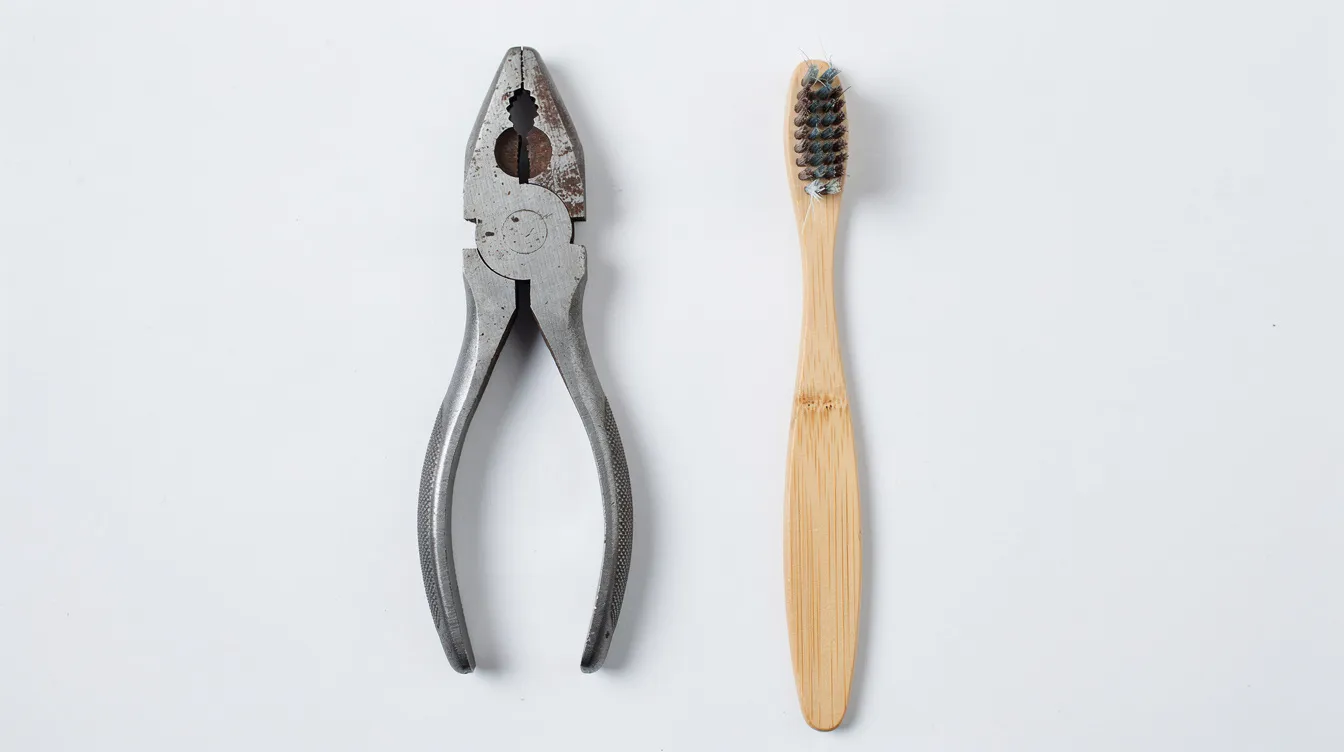
If your toothbrush has nylon bristles, they need to come out before composting. Bristles on quality bamboo toothbrushes are firmly anchored, so pliers work best for removal.
-
Use needle-nose pliers to grip a small cluster of bristles close to the base
-
Pull straight up from the hole to avoid tearing or splintering the bamboo
-
Work your way across the toothbrush head, removing bristles in small sections
-
If you don’t have pliers, you can snap off the entire head and dispose of it separately—though this leaves a small amount of non-compostable material
-
Removed nylon bristles should go into your local plastic recycling stream only if your facility accepts small flexible plastics; otherwise, throw them in regular trash to avoid contaminating your compost
-
Any visible metal staples should be separated and placed in metal recycling or a dedicated collection jar
Step 3: Break the Handle Into Smaller Pieces
Breaking your handle into multiple pieces dramatically speeds up decomposition by increasing surface area for microbes to work on. Here’s how to do it safely:
-
Soak the handle in water for 30–60 minutes to soften the bamboo (optional but helps prevent splinters)
-
Lightly score the handle where you want it to break using scissors or a knife
-
Place the score line on the edge of a counter or table
-
Press down firmly on both sides until the handle snaps—wrap in a towel for extra caution against splinters
-
Repeat to create 2–3 smaller compostable pieces
Step 4: Get to Composting
With the bristles and any metal removed, your bamboo handle is ready for its next chapter.
For more inspiration on how to recycle and repurpose your bamboo toothbrush instead, check out our recycling and repurposing guide.
Home Compost vs. Commercial Compost: What to Expect
Not all compost systems work the same way. Understanding the difference between home and commercial composting helps set realistic expectations for how quickly your bamboo handle will disappear.
Home compost operates at lower temperatures (typically ambient to around 50°C), with variable moisture and less frequent turning. These conditions still break down bamboo effectively, but the process takes longer.
Commercial or industrial compost facilities maintain temperatures above 55°C with controlled aeration and moisture. This accelerated environment breaks down organic materials much faster.
|
Composting Method |
Expected Decomposition Time |
|---|---|
|
Active home compost |
3–6 months |
|
Commercial/industrial compost |
A few weeks to 2 months |
|
Buried in garden soil |
1–2 years |
|
Left on surface outdoors |
5–10 years |
Composting specifics to know:
-
Bamboo toothbrush handles break down fastest in commercial compost facilities
-
In a well-maintained home compost with balanced greens and browns, expect roughly 4–6 months
-
Simply burying a handle in soil without active composting will still work, but decomposition stretches to several years
-
Local availability of commercial compost varies by city. Check your municipal waste management website for options
Composting a Bamboo Toothbrush in a Home Compost Bin
Adding a bamboo handle to your backyard bin is straightforward once you understand the basics.
-
Add the cut bamboo handle along with other “brown” materials like dried leaves, cardboard, or wood chips
-
Smaller pieces decompose faster, so breaking or sawing the handle into sections helps accelerate the process
-
Moisture, warmth, oxygen, and microbial activity all influence breakdown speed
-
Under active conditions with regular turning, the handle may mostly disappear within 3–6 months
-
Place handles deeper in the pile rather than on the surface for better contact with heat and beneficial microbes

Sending Bamboo Toothbrush Handles to Commercial Compost
Commercial composting facilities offer the fastest route to decomposition. These industrial operations maintain temperatures often above 55°C (131°F), creating ideal conditions for rapid breakdown of organic materials.
-
Search “commercial compost facility near me” or check your city’s waste-management website to confirm they accept small wooden items
-
Many industrial composters accept clean, untreated plant-based materials, but local policies vary significantly
-
In these systems, a thin bamboo handle may decompose within a few weeks to a couple of months
-
Always strip bristles and metal staples before drop-off to avoid contamination and potential rejection
How Long Does a Bamboo Toothbrush Take to Decompose?
The timeline for bamboo decomposition varies dramatically based on conditions. Here’s a realistic breakdown:
|
Environment |
Time to Full Decomposition |
|---|---|
|
Active home compost |
3–6 months |
|
Commercial compost |
2–8 weeks |
|
Buried in garden soil |
1–3 years |
|
Left on surface outdoors |
5–10 years |
|
Plastic toothbrush in landfill |
500–1,000 years |
Decomposition factors:
-
Climate, moisture levels, and whether you break the handle into smaller pieces all influence the exact timeline
-
A handle left whole takes longer than one chopped into sections
-
Treated or coated bamboo (with varnish or waterproofing) breaks down more slowly than untreated handles
-
Always aim for the “fastest” option available to you—active composting beats passive burial every time
Alternatives if You Can’t Compost Your Bamboo Toothbrush
Not everyone has access to a garden, backyard bin, or industrial compost program. The good news: bamboo handles still offer more sustainable options than plastic even without composting.
-
Reuse and upcycle: The toothbrush handle makes excellent garden markers, cleaning tools for tiles and grout, or craft supplies for kids’ projects
-
Local compost drop-off: Many farmers’ markets and community gardens accept compostable materials—check local listings
-
Municipal green waste: Some cities accept bamboo in yard waste bins that go to commercial composting
-
Landfill as last resort: A bamboo handle in landfill will still break down over a few years rather than centuries like plastic
For more creative ideas on extending the life of your brush, check out our recycling and repurposing guide.
Environmental Benefits of Composting Bamboo Toothbrushes
Every toothbrush swapped from plastic to bamboo reduces demand for fossil-fuel-based materials and cuts down on plastic waste that persists in the environment for generations. When you compost that bamboo handle, you’re completing a natural cycle.
Composted bamboo returns carbon and nutrients to the soil, supporting healthier soil structure and microbial life. If you use that compost in your garden, your old toothbrush literally helps grow your food.
The scale of the problem makes individual action meaningful:
-
Over 1 billion plastic toothbrushes head to U.S. landfills annually
-
Those brushes shed microplastics during use and take centuries to break down
-
Bamboo handles biodegrade completely, leaving no toxic residue
-
Choosing natural bristle options eliminates microplastic shedding entirely
This connects directly to the mission of Bamboo Toothbrushes: curating oral-care products that minimize plastic and help consumers make low-waste choices every day. Your teeth get clean, and the planet doesn’t pay the price.

Why Choose Bamboo Toothbrushes for a Lower-Waste Routine?
Bamboo Toothbrushes is a brand focused on sustainable, plastic-free oral care. We curate adult bamboo toothbrushes and related accessories that meet strict environmental standards—so you don’t have to research every product yourself.
What makes our approach different:
-
Real testing: Every product is tested by real humans for dental health performance, not just sustainability claims
-
No nylon, ever: We exclude nylon bristles entirely, ensuring every option on our site is completely compostable
-
Rankings and recommendations: Our guides help you find good quality options at great value
-
Education first: We believe informed consumers make better choices for their mouth and the environment
-
Responsibly sourced bamboo: FSC-style certified materials with proper care for forest ecosystems
While bristles across the industry are still evolving, choosing a bamboo handle with soft plant based bristles already represents a dramatic improvement over standard all-plastic brushes. You’re not waiting for a perfect solution—you’re choosing the best available option today.
Disposal Checklist: End-of-Life for Your Bamboo Toothbrush
Here’s a simple, scannable checklist to follow every time you replace your toothbrush:
- Retire your brush after ~3 months or when bristles show wear
- Rinse and clean the brush thoroughly
- Let it air dry completely
- Remove bristles using pliers (if nylon)
- Remove any metal staples and recycle with metals
- Break the handle into 2–3 pieces for faster composting
- Add to home compost, commercial compost, or repurpose
- Dispose of nylon bristles in trash (or recycling if accepted locally)
- Grab your next brush and repeat
Consider sharing your composting or upcycling ideas with friends and on social media. The more people normalize low-waste oral care, the faster sustainable options become the standard rather than the exception.
Ready to make the switch? Browse our selection of 100% biodegradable bamboo toothbrushes and find the right fit for your bathroom routine.